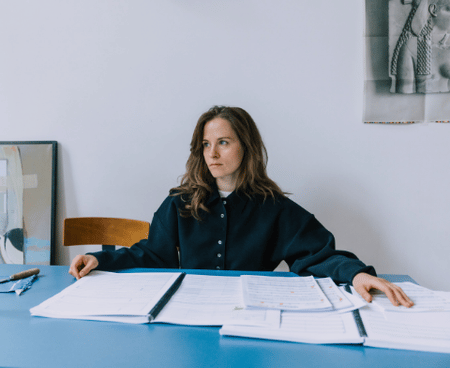
I was introduced to her through a mutual friend. She came to Warsaw, for the very first time, to lead a healing yoga retreat with her partner. From the very first moment - her presence, her words - I felt an immediate connection that has only deepened over time. Today, I am honored to present Satya: teacher, artist, mother and seeker, who lives in trust, intuition and love - showing us another way of being, one breath at a time. We met her at Pura Amrita, her home in Mallorca - a simple, restored finca surrounded by a blossoming field of seventy almond trees that had once lain dormant for decades. Here, the land itself seems to awaken alongside the teachings, offering a setting as alive and generous as the conversation that follows.

Before we ever spoke, my first impression of you was striking - your radiant smile, the sparkle in your eyes, the blissful, glowing presence surrounding you. My friend perfectly described it as „pure love”. And it’s clearly not just skincare or highlighter…
Beautiful. Thank you for those words. They resonate. One of the reasons I started to share was because people would ask me: What is it in you that glows? What is your secret? And the secret was never external - it has always come from within.

From a very young age, I felt a connection to the depths of life itself, a resonance with essence. I was always drawn to being in nature and attuning to the living beings around me. I was enchanted by simple things: dust particles dancing in the light, clouds moving across the sky, birds singing. I never closed my senses; they became like antennas, connecting me to what I experienced as magic. That resonance with essence gave me peace – and perhaps that is what people now perceive as radiance.

Let me ask the most fundamental - yet perhaps most elusive - question: who are you?
Who am I? In truth, the answer that arises is silence. I feel I am nobody, and at the same time, I am everything. Of course, I embody being a woman, a mother, a partner, a grandmother, a sister, a friend – all of these roles that I play. But they come and go. Deep inside, I identify with being nobody. I don’t have the sense that I am here and know anything. I am simply an instrument that life plays through. And I love playing – whether it’s as a grandmother, a teacher, a lover, or simply being alive. I love life.

At the age of 13, you had a near-death experience that marked a profound turning point in your life. How did that moment shape your perception of reality and the way you moved through the world afterward?
The accident at 13 was only a confirmation of something I already knew – that existence is not limited to the physical. When I came back into the body, it became very difficult for me to have boundaries. I didn’t. I felt more like a transparent body. And knowing that each body emits a certain field of energy, I could sense whether to come closer or not. It was a kind of intuition – I was always very intuitive, and my intuition was constantly at work. From then on, I never felt the need to control life. One reason I don’t resonate with stress is because I know life is unpredictable. I live with trust, as if life were an experiment, an exploration – it could go right, left, up, down, it didn’t matter. Trust became the ground. When you live with trust, you are not trying to control. That openness guided me step by step to teachers, traditions, and experiences. My path was revealed through intuition rather than through planning.

For 17 years, art was a central part of your life, alongside your spiritual practice. Then, you set it aside to fully immerse yourself in yoga and Dharma. What was the turning point that shifted you from being a seeker to becoming a teacher yourself? Was it a conscious choice or something that unfolded naturally?
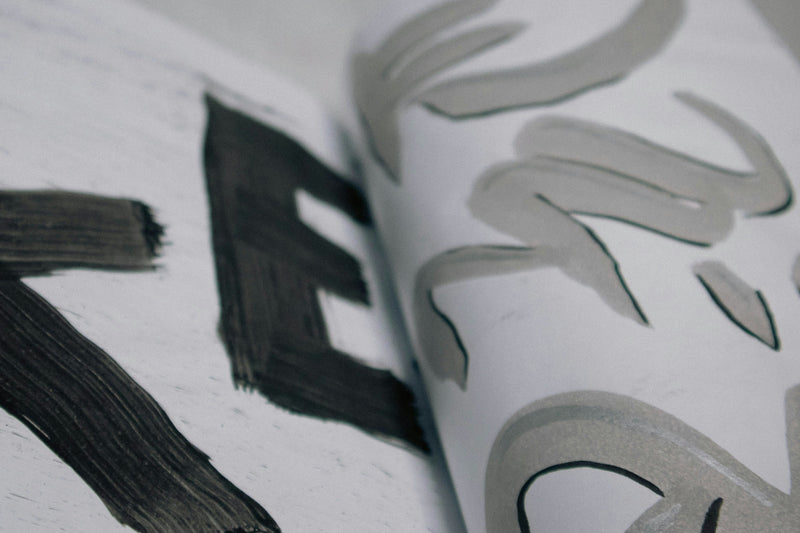
Art was my first language – the way I communicated what I couldn’t put into words. For many years, I lived as both an artist and a seeker. But eventually, teaching became so present that I couldn’t hold both. It was not something I planned. People kept asking me, What is your secret? At first, I could only express it through art, but slowly words began to emerge. Then came a moment – a crossroads – when I started to share. I began opening myself to meet groups and guide people. Eventually, the requests grew so much that I could no longer balance both art and teaching. I had to make a conscious decision – I literally closed my studio, rolled up my paintings, and put them in the attic. It felt like a funeral. I became deeply sick, and yet I said yes to the other path. But my heart was broken. For about ten years, I devoted myself fully to teaching. I only opened that gate, and I walked through it completely. It was very natural. At first, teaching felt like another form of art. I could relate to it through my artistic nature, because I was never really eloquent. I always say: I don’t speak any language well, I am not a speaker – I am an artist. And suddenly the words became like painting. I started to feel that I could paint with words, transmitting something deeper to more people. Satsang later became a natural extension: a space to mirror truth and create community. It was a shift born of necessity, but also a continuation of the same impulse to express essence.

Your path also took you across the world – from Chile to the Netherlands, then India, Tibet and Nepal. Did you always know you were meant to follow this path, or did it reveal itself along the way?
It was also very much an impulse, very much an intuition. Around the age of 14, my father gave me Siddhartha by Hermann Hesse. From then on, I wanted to go to India. When I left Chile at 23, the idea was to travel to India. But I became pregnant with my partner… So I started to meet masters in the Netherlands. One was from the lineage of Yogananda. A few years later, I heard the name of a Tibetan master, Namkhai Norbu, and went to meet him. He became my first root teacher. I was in my late twenties – about 27 – when I met him, and it felt like a total recognition.

Later, when I was around 29 or 30, one of my yoga teachers invited me to India. He wanted to show me India. I went for three months but stayed for eight, bringing my six-year-old son with me. When I visited the abode of Ramana Maharshi, although he was still in the body, I felt his full presence. Not long after, I met one of his direct disciples, Papaji, who became, together with my Tibetan master, one of my greatest teachers.

You’ve devoted your life to yoga and spiritual practice, yet you’ve also lived what some might call a “normal” life – raising a son, keeping a household, even having a LinkedIn account. How did you balance these seemingly different worlds? Did they enrich each other, or rather feel at odds?
Trust and discipline. I blindly trusted my intuition – if it said go, I went, even if it meant traveling to India with a young child or leaving for retreats when life seemed complicated. Every time I said yes to that inner voice, life supported me – even when it appeared impossible. It’s not about waiting until everything is arranged before you act. It’s about saying yes, and then everything aligns.

Discipline also grounded me: waking early, listening to my body, keeping rhythms. I think balance comes not from separating the ‘spiritual’ and ‘ordinary’ but by living everything fully. Being a mother, an artist, a teacher – all of it is life, and I embraced each role completely.

What role does discipline play in spiritual practice?
Discipline is crucial, but not as sacrifice – as devotion. Discipline means becoming a disciple of what you love most. For me, that meant waking before my family, sometimes at 5 a.m., to sit in silence, to move my body, to listen to my breath. It gave me energy for the whole day. Just as an artist practices an instrument, we must practice being present. That’s what discipline is – daily devotion to what matters most.

Today, you are sharing your life with Sahaj. How does walking this path with a partner shape your journey?
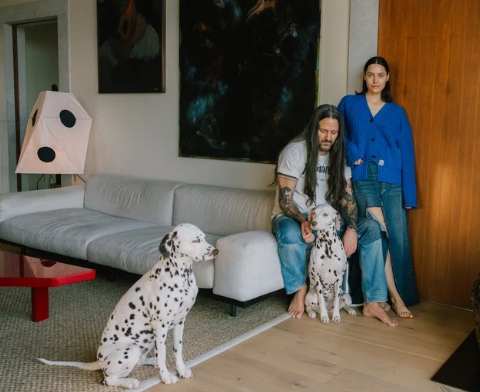
I always tell him he’s the fun part. It’s such a joy to be together and to share this journey. It feels almost like a cosmic joke that life made us wait until we were around 50 to meet. It’s an incredible gift. We had both walked similar paths separately, meeting the same teachers at different times, until finally life brought us together. Now we share this journey, complementing one another. I’m more minimalistic, he’s more colorful – and together it feels complete. It shows people that living this way as a couple is possible: ordinary and extraordinary at once. Without him, yes, it would be boring!

If you could share just one essential truth with someone seeking wisdom, what would it be?
Learn to feel. Trust, intuition, surrender – they all begin with feeling. Not interpreting feelings with the mind, but sensing directly, like entering water and experiencing its temperature. Our culture ignores this raw, direct terrain of feeling, but it is the doorway to our hearts, to coherence with body, mind and universe. If I had to give just one direction, it would be: start listening deeply, start feeling.

Find Satya at www.puramrita.com and www.suchness.nl